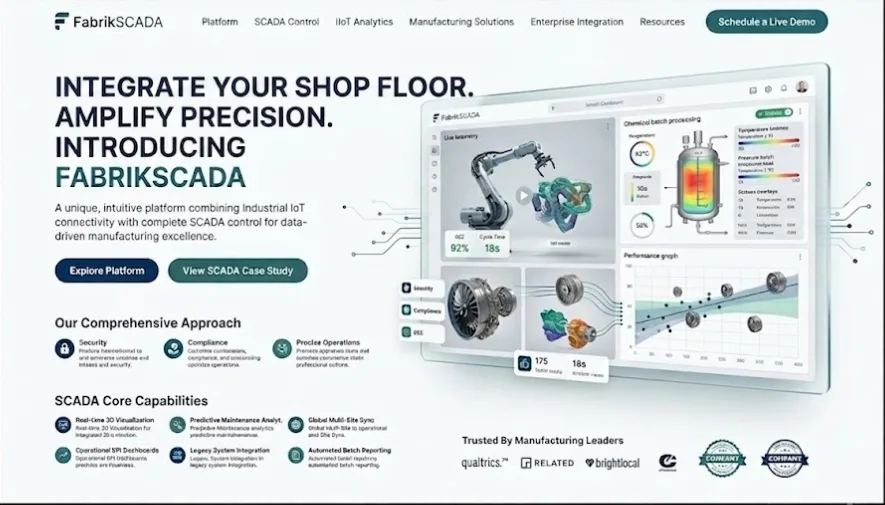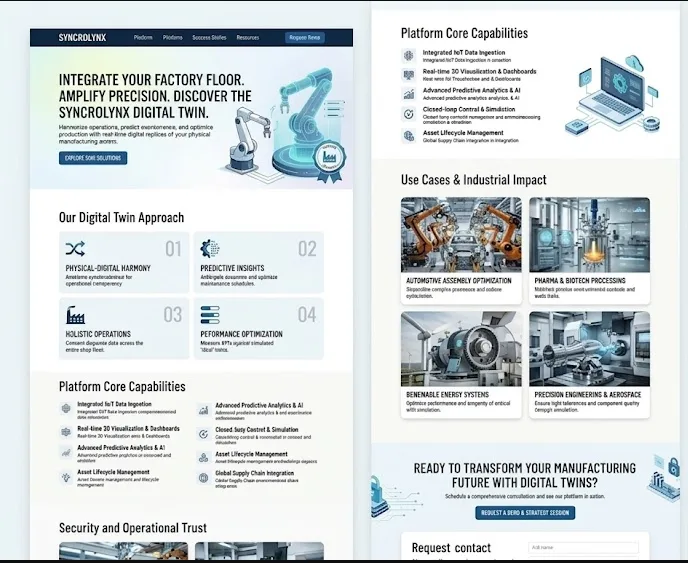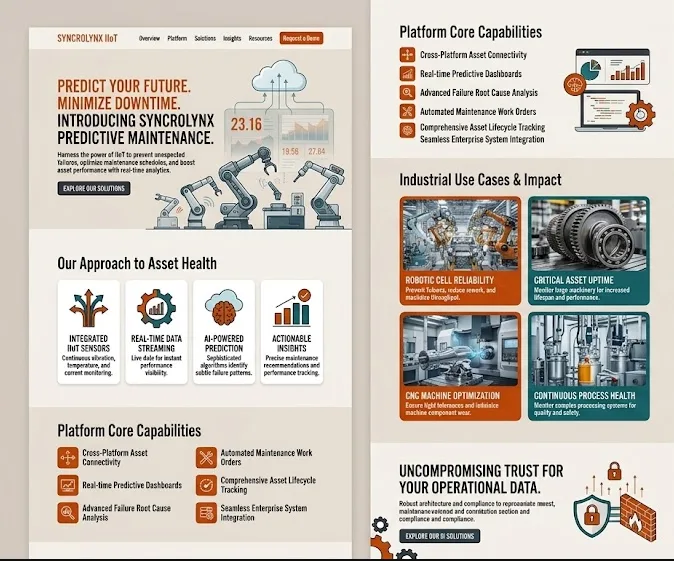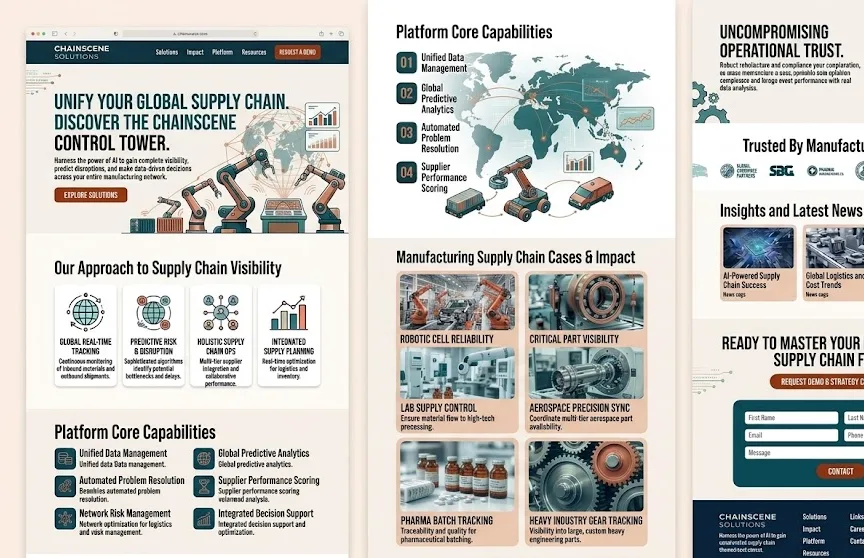
MES and plant data integration
Line, ERP and quality systems joined so production is one record rather than three that disagree at the end of every shift.

MES integration, industrial IoT, predictive maintenance and supply chain visibility, so the number on the floor and the number in the report finally agree.
Talk to our plant team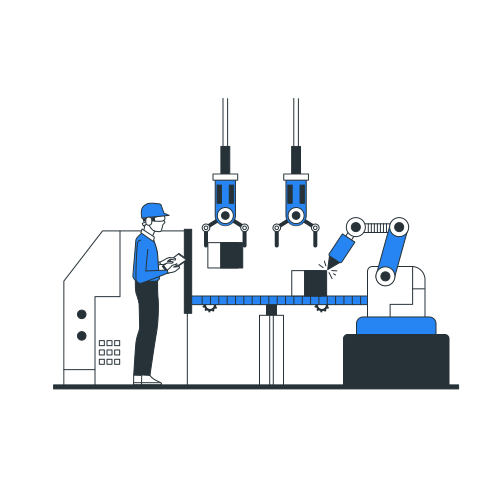
One senior pod across the line, the data and the systems above it, so plant reality reaches the people making decisions while it still matters.
Four outcomes agreed as measures before the build starts, and reported against once it ships.
The line, the ERP and the board pack agree, so the shift meeting stops being a reconciliation.
Failures are caught as signals with a work order attached, rather than as a stopped line.
Plant data reaches a supervisor while they can still act on it, not in tomorrow's report.
Runbooks, access and a recorded walkthrough at handover, so your team is not dependent on ours.

Three things decide whether a plant data programme changes anything, or just adds another screen nobody opens.
We collect from equipment without sitting in the path of anything that controls it. Read paths first, and nothing goes near a controller without a rollback.
A number that arrives after the shift has ended is trivia. We design around when a decision is actually made, and work back from there.
Repositories, cloud accounts and documentation sit in your name from the first commit. Leaving should cost you notice and nothing else.

Four stages from first conversation to a system your own team runs. Every engagement passes the same gates, with plant safety and adoption tracked from day one.
The line as it actually runs, what each system already knows, and where the shift currently relies on somebody writing it down.
You get: A line and systems map, with every data gap named
Data paths and interfaces designed around the moment a decision gets made, reviewed with supervisors rather than signed off in an office.
You get: Supervisor-reviewed interfaces and the data architecture
Senior engineers shipping in short cycles you can watch, with network segmentation and access in place from the first commit.
You get: Working software every cycle, with segmentation already in place
Read-path testing against live equipment, a security review, then a phased rollout line by line with runbooks and a support window.
You get: Security review, runbooks and a line-by-line rollout plan
No. We start from read-only paths and stay out of anything that controls equipment. Where a write path is genuinely needed, it is designed with a rollback and proved on one line before it goes anywhere near the rest.
That is the normal case rather than the exception. We build the adapter, document it, and treat the protocol work as part of the engagement instead of a surprise change request halfway through.
Almost never. Most engagements integrate what you already run, because the problem is usually that the systems do not talk rather than that any one of them is wrong.
Segmented networks, least-privilege access and full audit trails, designed in the first sessions. Connecting the plant should not mean exposing it, and you get the evidence to show that.
Predictive maintenance and quality signals learned from your own equipment history, always with a confidence score and a work order behind them. An unexplained alarm gets ignored, and rightly so.
You do, from the first commit. Repositories and cloud accounts are created inside your organisation, and nothing we build is licensed back to you or shared between clients.
Platforms and automation delivered for manufacturers and industrial wholesalers.

Tell us where the shift meeting still relies on a spreadsheet, and a senior engineer will come back to you within one business day.