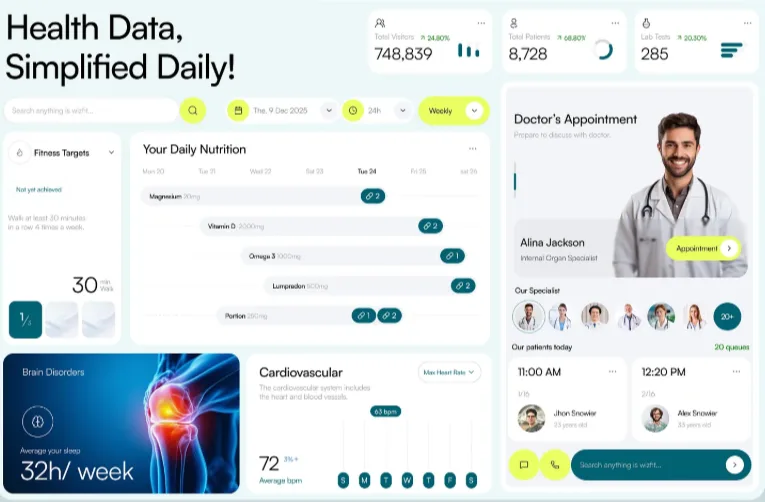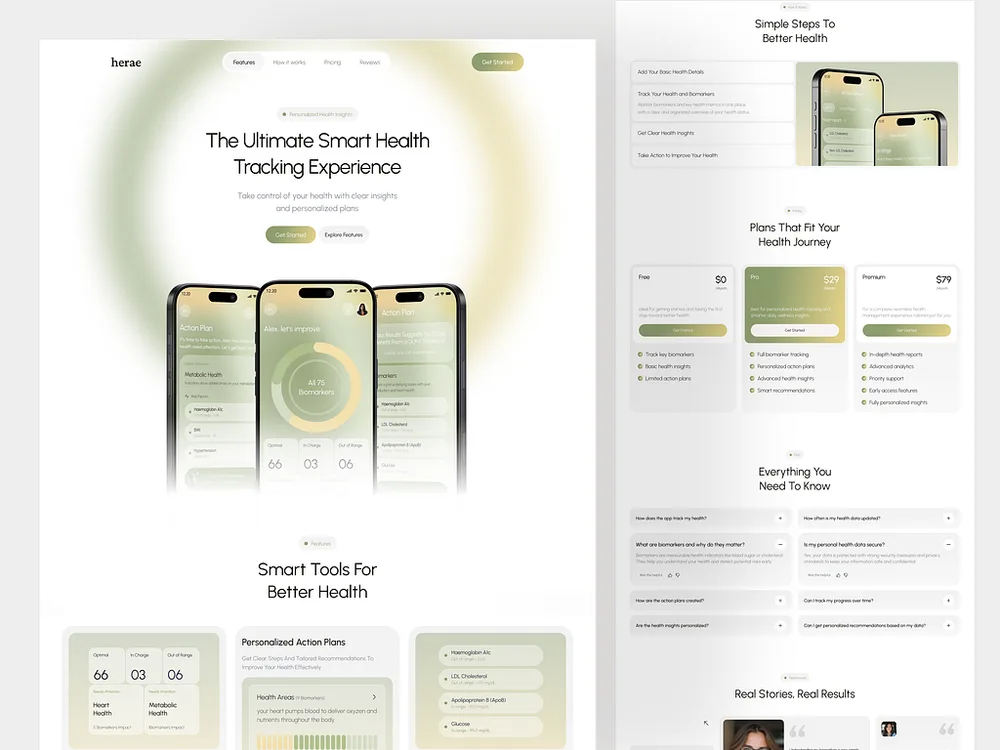
Patient apps and portals
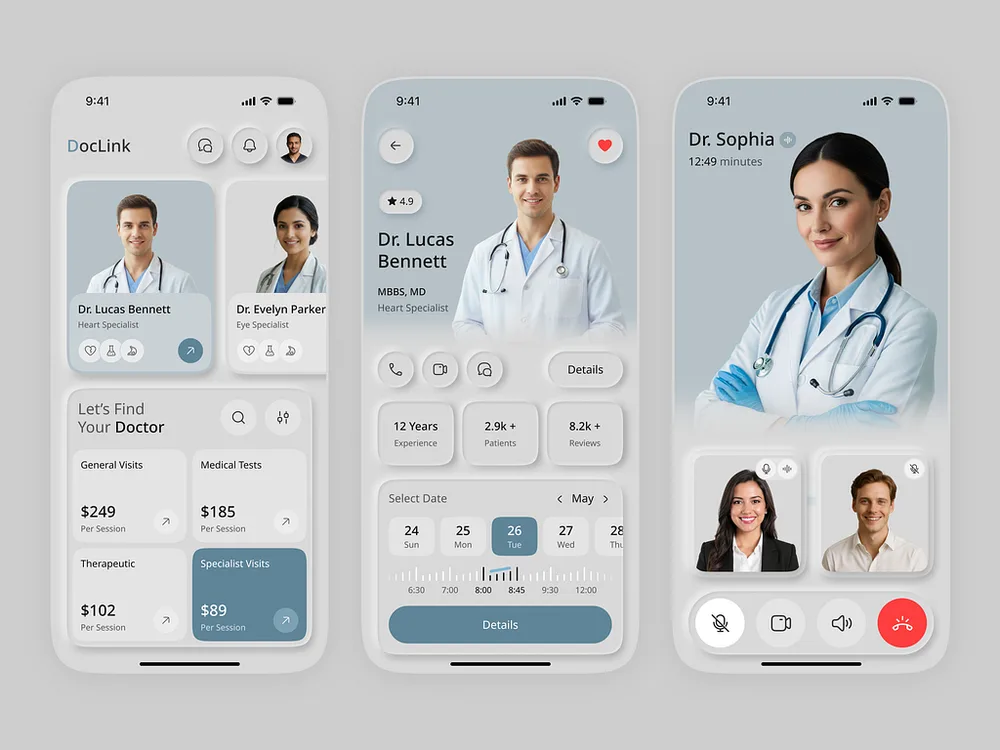
Booking, video consults, results and secure messaging. HIPAA grade throughout and accessible by default, not as a later pass.

Patient records, scheduling, billing and prescriptions on one system, with HIPAA designed in from the first architecture session, not the week before launch.
Talk to our healthcare team
One accountable senior pod owns architecture, build, clinical safety and handover, so nothing falls into the gap between a vendor and an integrator.
Four outcomes we hold ourselves to on every healthcare build, agreed as measures before the work starts.
Clinicians spend the consult with the patient rather than hunting through tabs for one result.
The history follows the patient between clinics instead of being rebuilt at each front desk.
HIPAA and access control are settled at architecture, so launch is not a scramble for evidence.
Runbooks, access and a recorded walkthrough at handover, so your team is not dependent on ours.

Three things decide a healthcare build, and they are the three most often left until it is expensive to fix them.
The engineers who scope the architecture are the ones who build it, and the ones still on the phone when something breaks at an inconvenient hour.
Confidence scores, review queues and audit trails belong in the first architecture session, not retrofitted the week before a governance review.
Repositories, cloud accounts and documentation sit in your name from the first commit. Leaving should cost you notice and nothing else.

Four stages from first conversation to a system your own team runs. Every engagement passes the same gates, with clinical safety and adoption tracked from day one.
Clinical workflows, the systems already in place and every boundary patient data crosses, mapped with the people who work in them daily.
You get: A workflow map, a systems inventory and the agreed measures
Interfaces designed against real consultation time and reviewed with clinicians, rather than signed off by a committee that will never use them.
You get: Clinician-reviewed prototypes and the architecture behind them
Senior engineers on the work, shipping in short cycles you can watch, with the security model in place from the first commit rather than the last.
You get: Working software every cycle, in your own repositories
Safety review, access testing and the evidence pack your governance team files, then a phased rollout with runbooks and a support window.
You get: The governance evidence pack, runbooks and a recorded walkthrough
Yes. Most engagements start by integrating what you already run rather than replacing it. We work on HL7 and FHIR, and where an older system exposes neither, we build the adapter and document it.
It is an architecture decision, not a checklist at the end. Least-privilege access, encryption at rest and in transit, and a full audit trail are designed in the first sessions, and you get the evidence pack your governance team needs to file.
Yes, after an audit. We will tell you honestly whether the existing code is worth continuing or whether the cheaper path is rebuilding the part that is actually failing.
Most builds reach a usable first release inside a quarter, with something clinicians can try well before that. We give you a real date rather than an optimistic one, and report against it.
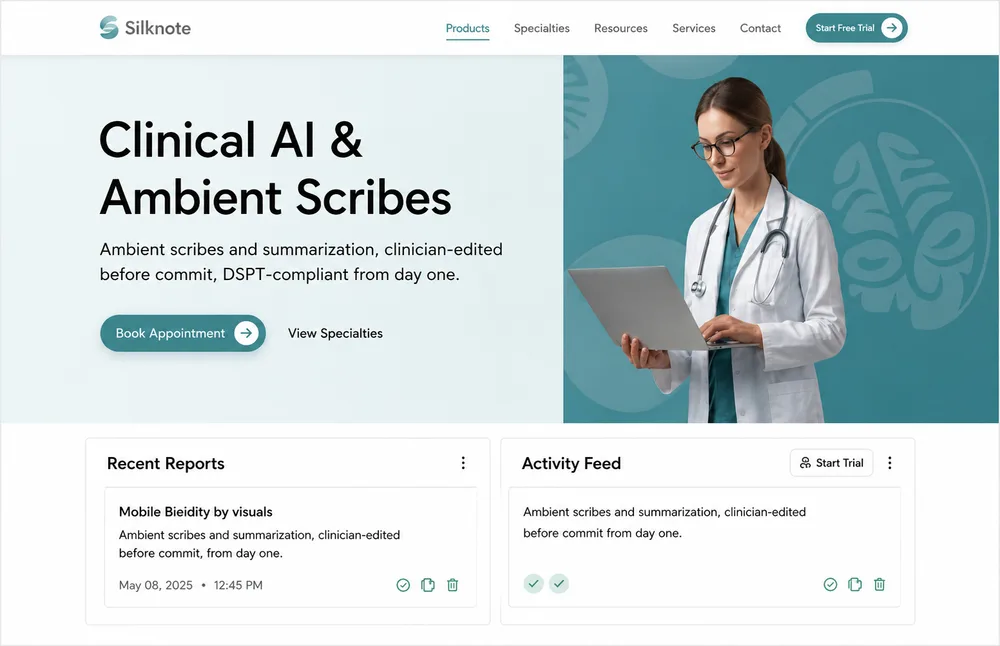
Drafting, summarisation and triage support, always with a confidence score and a review queue behind it. A model that cannot show its reasoning does not go near a decision that carries clinical consequences.
Platforms, programmes and campaigns delivered for clinics and practices.

Tell us what you are building, or what is already failing, and a senior engineer will come back to you within one business day.